Per- and polyfluoroalkyl substances (PFAS) are a group of synthetic compounds that have been widely used since the 1950s and are found in the environment and in the food supply. A recent study conducted by the International Pollutants Elimination Network (IPEN) examined PFAS sources in twelve Middle Eastern and Asian countries. The study revealed alarming levels of PFAS in consumer products, including food packaging items and cow milk. The study also found that marine and terrestrial organisms were contaminated with PFAS, with commonly consumed seafood in several countries showing high levels of contamination. In Japan, a variety of terrestrial organisms, including birds, livestock, and wildlife, were found to be affected by PFAS pollution.
These findings highlight the widespread presence of PFAS in the environment. Because of the longevity of these chemicals, they pose a risk to human health through food and tap water consumption and other exposures. In order to understand the magnitude of the problem and to ultimately protect public health, regulatory agencies in various countries regularly detect and analyze PFAS in the food supply.
PFAS Detection in Food in the US
In the US, the FDA regularly tests the US food supply for PFAS and assesses any possible health concerns when PFAS is detected. Their protocol by Genualdi and deJager outlines a method for detecting 30 PFAS in various food and feed samples using Liquid Chromatography-Tandem Mass Spectrometry (LC-MS/MS). The method has been validated to detect PFAS in lettuce, chocolate milk, salmon, bread, eggs, clams, blueberries, silage, and corn snaplage.The procedure involves homogenizing the sample, adding isotopically labeled surrogates, and extracting PFAS using acetonitrile and formic acid. Because solid phase extraction (SPE) can concentrate PFAS from large volumes of samples and remove potential interfering substances that could compromise detection sensitivity, PFAS detection often includes an SPE step before LC-MS/MS. This method provides a reliable way to detect PFAS in food, ensuring consumer safety and regulatory compliance.
An FDA study found that of the food samples containing PFAS, most of them were seafood. This led them to perform a more targeted analysis of PFAS in seafood, which they described in a publication in the Journal of Agricultural and Food Chemistry. This study focused on analyzing 20 PFAS in highly consumed seafood products from US markets including clams, crab, tuna, shrimp, tilapia, cod, salmon, and pollock. The results showed a wide range of PFAS concentrations among the seafood samples, with the highest levels found in clams and crabs. This research highlights the importance of prioritizing PFAS research and monitoring in foods where PFAS has been previously detected.
PFAS Detection in Food in Europe
The European Reference Laboratory (EURL) for Halogenated Persistent Organic Pollutants in Feed and Food recently revised its Guidance Document on Analytical Parameters for the Determination of PFAS in Food and Feed. The document outlines recommendations for laboratories to ensure accurate analysis of PFAS in food samples, including accreditation, proficiency testing, and measures to avoid contamination. It also provides guidelines for sample pre-treatment, storage, and transportation to maintain the integrity of the samples. The document emphasizes the importance of using PFAS-free materials and equipment during sampling and analysis to prevent contaminating the sample. By following these guidelines, laboratories can detect low levels of PFAs accurately.
A recent study by Theurillat et al. developed an LC-MS/MS method to quantify 57 PFAS compounds in various food matrices at ng/kg levels. The method was validated in seven different food types, including milk powder, infant formula, baby food puree, fish, eggs, and coffee. The compounds included in this study were sourced from the targets listed by the FDA and EU as well as other compounds. The study followed EU guidelines for PFAS analysis and met limits of quantification requirements set by the EU. This method provides a valuable tool for monitoring PFAS contamination in food and highlights the importance of continued surveillance to protect public health.
The Role of Solid Phase Extraction (SPE) in a Food and Beverage Laboratory
As globalized food trade has become more common in recent years, improved screening methods combined with food inspection investigations have put a large amount of pressure on the food and beverage industry to improve quality assurance and control. This pressure led to the FDA Food Safety Modernization Act (FSMA), which aims to ensure the US food supply is safe by shifting the focus of federal regulators from responding to contamination to preventing contamination.
Explore More
The Role of Solid Phase Extraction (SPE) in PFAS Detection in Food Products
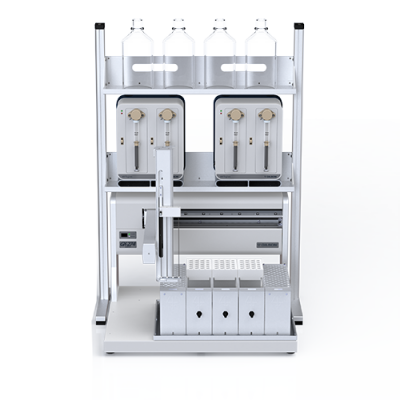
Solid Phase Extraction (SPE) techniques have emerged as a crucial component in the detection and analysis of PFAS in food products. SPE is particularly valuable in isolating PFAS from complex food matrices. In their 2017 study published in PLOS ONE, Valdersnes et al. investigated the levels of PFAS in 200 North East Arctic cod liver samples from 15 Norwegian fjords and harbors. The researchers utilized automated sample preparation techniques, solid phase extraction using Gilson’s ASPEC, and ultracentrifugation to analyze 16 PFAS compounds in the liver samples. This automated sample preparation method allowed for efficient and accurate extraction of PFAS from the cod livers, enabling the researchers to detect and quantify these compounds in a large number of samples. The results of the study revealed geographical trends in PFAS levels, finding that both geographical sources of contamination and biological factors may contribute to variations in PFAS levels.
The study highlighted the importance of automated sample preparation techniques in environmental monitoring and research. By utilizing automated methods for sample extraction and analysis, including SPE, the researchers were able to process a large number of samples efficiently and accurately, leading to robust and reliable results. The use of automated SPE not only minimized the risk of contamination and human error but also ensured the integrity of the data obtained from the study.
Perspectives for the Future of PFAS Detection
Moving forward, integrating automation technologies in PFAS detection, as demonstrated by Valdersnes et al., holds promise for streamlining the analysis process, improving accuracy, and enhancing efficiency in monitoring PFAS contamination in food. SPE techniques, in particular, play a crucial role in isolating and concentrating PFAS from complex food matrices, thereby enhancing the sensitivity and reliability of analytical methods. By utilizing automated SPE, researchers can process a large number of samples efficiently and accurately, leading to robust and reliable results. Overall, the advancements in automation for PFAS detection offer a valuable tool in ensuring food safety and regulatory compliance in the face of this persistent environmental contaminant.
Application Center: Contaminants in Food
Food contamination has a lot of different meanings, but by definition, it’s a food that’s spoiled or contaminated because it contains microorganisms, such as parasites or bacteria, or toxic substances that make them unsafe for consumption. Analytical testing is crucial for maintaining food safety. Successful detection of mycotoxins, pathogens, or leachables in food products requires reliable and reproducible pre-analytical sample preparation. Food testing labs need reliable automated methods that standardize sample handling and release skilled personnel for more valuable tasks.
Explore More
Sources
- PFAS POLLUTION ACROSS THE MIDDLE EAST AND ASIA, APRIL 2019 IPEN
- Susan Genualdi and Lowri deJager, Determination of 30 Per and Polyfluoroalkyl Substances (PFAS) in Food and Feed using Liquid Chromatography-Tandem Mass Spectrometry (LC-MS/MS), FDA METHOD NUMBER: C-010.03
- Young W, Wiggins S, Limm W, Fisher CM, DeJager L, Genualdi S. Analysis of Per- and Poly(fluoroalkyl) Substances (PFASs) in Highly Consumed Seafood Products from U.S. Markets. J Agric Food Chem. 2022 Oct 26;70(42):13545-13553. doi: 10.1021/acs.jafc.2c04673. Epub 2022 Oct 17. PMID: 36251396; PMCID: PMC9614959.
- EURL for halogenated POPs in feed and food (2024): Guidance Document on Analytical Parameters for the Determination of Per- and Polyfluoroalkyl Substances (PFAS) in Food and Feed, version 2 of 10 September 2024. Available online under https://food.ec.europa.eu/document/download/347489fe-9671-4515-b378-64c3a15c160f_en?filename=cs_contaminants_sampling_guid-doc-analyt-para_0.pdf
- Theurillat X, Mujahid C, Eriksen B, Griffin A, Savage A, Delatour T, Mottier P. An LC-MS/MS method for the quantitative determination of 57 per- and polyfluoroalkyl substances at ng/kg levels in different food matrices. Food Addit Contam Part A Chem Anal Control Expo Risk Assess. 2023 Jul;40(7):862-877. doi: 10.1080/19440049.2023.2226771. Epub 2023 Jul 6. PMID: 37410932.
- Valdersnes S, Nilsen BM, Breivik JF, Borge A, Maage A. Geographical trends of PFAS in cod livers along the Norwegian coast. PLoS One. 2017 May 22;12(5):e0177947. doi: 10.1371/journal.pone.0177947. PMID: 28531177; PMCID: PMC5439708.