In a quiet corner of UW–Madison’s Russell Labs basement, the Peery Wildlife Ecology and Conservation Lab studies some of the world’s most at-risk species.
“We mainly focus on wildlife,” explained Dr. Emily Fountain, Research Scientist and Molecular Laboratory Director. “Our work looks at population genetics, disease, and epigenetics. Really anything pertaining to the health and sustainability of populations that are already in decline.”
From tracking the impacts of invasive species to decoding how wildfires and toxins alter genetic diversity, Fountain’s team uses next-generation sequencing (NGS) to reveal how species survive, or fail to, under environmental pressure. “Everything we do now depends on NGS,” she said. The lab applies a wide range of sequencing approaches, from whole-genome and targeted sequencing to metabarcoding, all tied to next-generation sequencing technology. Each technique brings its own sample types and protocols, reflecting the diversity of questions the team aims to answer.
With thousands of wildlife samples and a small team of students, the lab’s growing success created a new problem: volume.
The Breaking Point: Too Many Samples, Too Little Time
Before automation, Fountain’s team performed every library prep and magnetic bead cleanup manually, a tedious, error-prone process. “It’s been many years of a lot of pipetting,” she recalled. “I make the joke that you get pipetting thumb, which I think is actually true.”
The challenge went beyond fatigue. “You make one mistake, often near the end of a long library prep, and you’ve just wasted a lot of money and time,” Fountain said. Student error rates could reach up to 50% during manual work, especially in the final stages of complex tasks like barcoding and magnetic bead cleanup.
Then came the turning point. “We had just started a new study to look at the effects of agriculture on wildlife,” Fountain explained. “The project involved processing 3,000 samples in two years and there was no way we could do that manually. That’s when I realized we had to go automated, or it would be a disaster.”
Choosing the Right Automation Partner
When searching for an automated pipetting system, Fountain weighed cost, accessibility, and trust. She considered other systems but was concerned about the need for proprietary tips and the lack of local support.
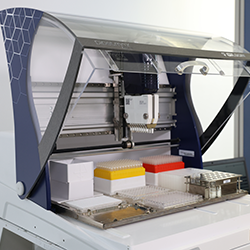
A collaborator from the Max Planck Institute in Germany recommended Gilson’s PIPETMAX® 268. “Once I found out a collaborator used it, I felt much more comfortable,” she said. “Plus, the fact that it used regular pipette tips really stood out.”
After a demo with Gilson’s team of application specialists, she was convinced. “They answered all of our questions and worked with us on how to adapt our protocols,” Fountain said. “Some of our samples are tricky—different quality, different species—and they were able to show us how flexible the system could be.”
One feature that really sealed the deal: “The magnetic bead rack, 100%. When I saw that you could automate this step, I was like, all right, that’s it.”
From Manual Chaos to Reliable Reproducibility
Fountain used task-based automation to address the most error-prone and time-consuming part of her workflow: magnetic bead cleanups for NGS library prep . “That’s the step where I saw the most mistakes,” she said. “It’s time consuming, and people struggle with timing and often over-dry or under-dry the beads, leave product behind, or lose samples.”
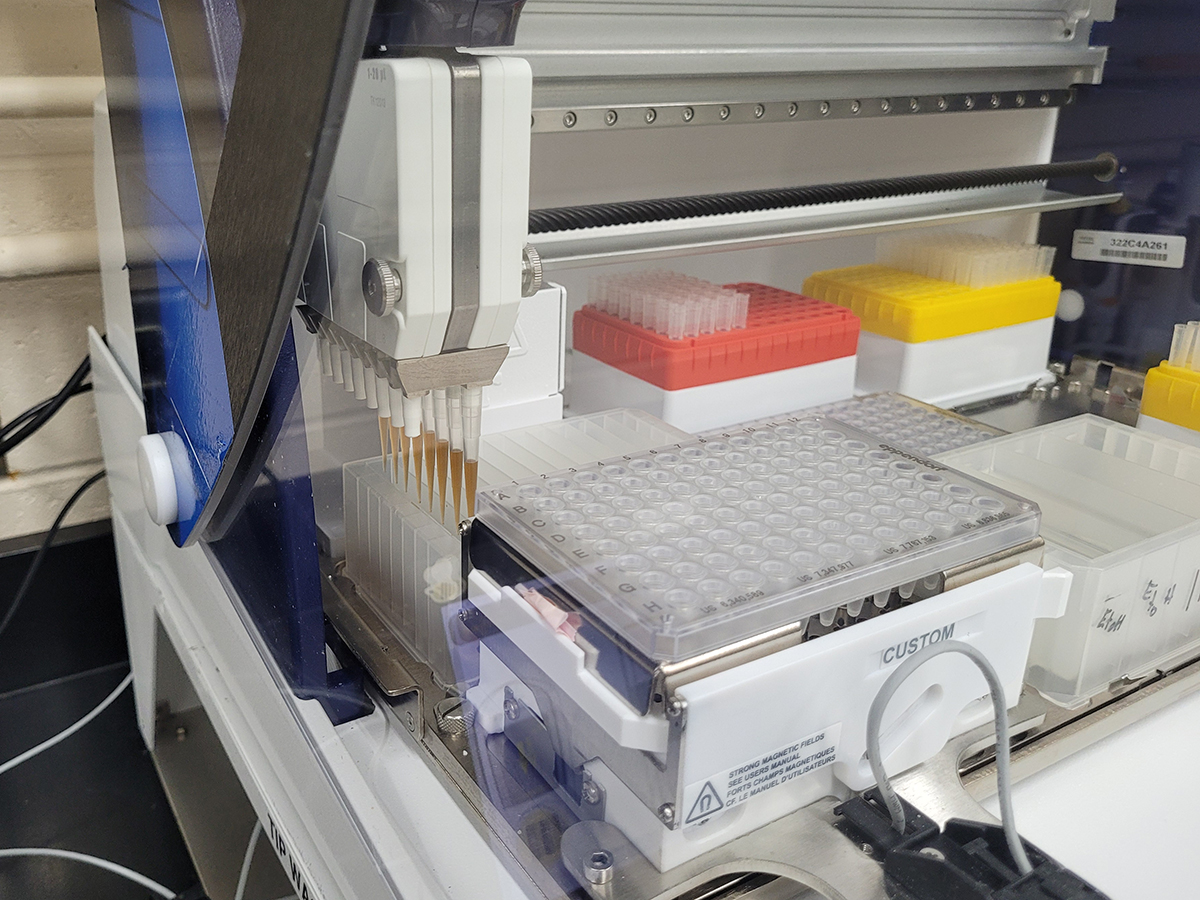
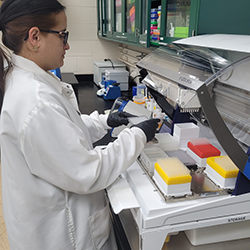
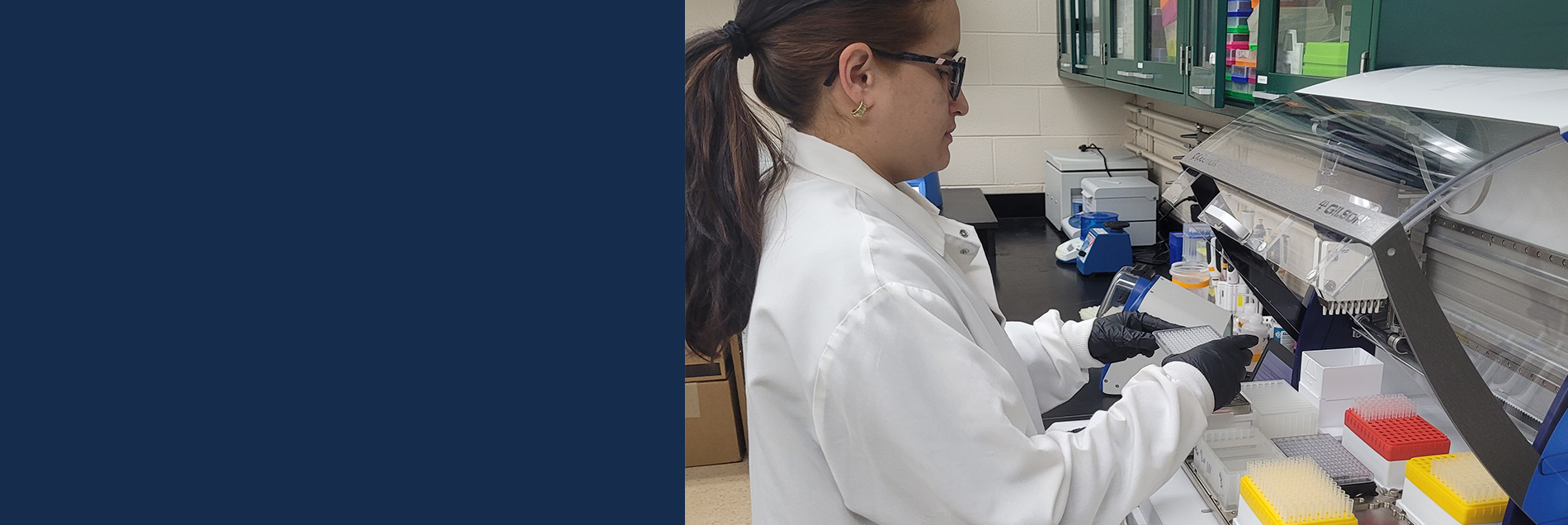
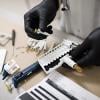
FIgure 1. PIPETMAX 268 running task-based automation for magnetic bead cleanups in NGS library prep at Peery Lab
With PIPETMAX 268, each 96-well plate was processed consistently. “It was just so nice to see all samples processed in a robust and reproducible manner,” she said. Once the cleanup protocol was optimized, her team expanded to barcoding steps, freeing up valuable time and reducing error rates dramatically.
The learning curve was manageable thanks to Gilson’s support. “Gilson’s application team was amazing,” Fountain recalled. “Every question I had, even small ones, they’d make a quick video showing me how to do it. We’d ask for tweaks and get them right away. It made the whole setup easy.”
Within a month, the lab optimized its protocol, customized to their unique NGS workflow and non-model wildlife samples.
Impact: Time Saved, Waste Reduced, and Capacity Doubled
Automating with PIPETMAX 268 immediately changed the pace and precision of the Peery Lab’s work. “It reduced the error rate, saved time, and eliminated the need to bring on additional staff to keep up,” Fountain said.
Her postdoctoral researcher now doubles daily throughput by running plates on PIPETMAX 268 while setting up PCRs in parallel. “She can prep metabarcoding PCRs while PIPETMAX is doing its thing,” Fountain explained. “It’s basically doubled the number of samples she can process in a day.”
The lab also appreciates that PIPETMAX 268 uses standard pipette tips, avoiding the high recurring costs of proprietary consumables. “It’s nice not having to buy special automated tips that can only be used with one system,” Fountain said. “It saves on purchasing and storage, too.”
Results That Speak for Themselves
Thanks to automation, the Peery Lab completed its ambitious 3,000-sample project on time. “It allowed us to actually complete our project and write the final report,” Fountain said. “Once we scaled up, we didn’t scale back. Now we know we can handle that level of throughput.”
More importantly, automation built credibility for future funding. “We proved that we can meet our grant goals,” Fountain said. “It showed that the investment was worth it and it’s opened up more opportunities to apply for bigger grants.”
I was nervous at first, because our samples are precious. Some come from species we may never get again. But once I saw PIPETMAX run, I trusted it completely.
Looking Ahead: Scalable Science for a Sustainable Future
For Fountain, automation wasn’t just about efficiency, it was about sustainability, both in science and for her team. “I was nervous at first, because our samples are precious. Some come from species we may never get again,” she admitted. “But once I saw PIPETMAX run, I trusted it completely . Now my students can’t break it and they can finally focus on learning the science, not just surviving the pipetting.”
The excitement spread through the lab. “Everyone was taking videos of it running and sending them to friends,” Fountain laughed. “It was such a huge deal for us because conservation labs like ours rarely get access to automation.”
She hopes their experience inspires other small or underfunded labs to explore automation. “You don’t need flashy budgets or massive facilities,” she said. “Start with the step that takes the most time or causes the most errors. Automate that first and it will already save you time and money.”
For Peery Lab, the investment has already paid off, not just in throughput or reproducibility, but in the ability to protect more species, more efficiently.
“Automation let us scale up without losing control,” Fountain said. “It helped us do the science we love, protecting species, more efficiently, more accurately, and with fewer mistakes.”
Unlock Flexibility: Task-Based Automation in Today’s Lab Workflows
Explore how targeted, task-based automation, rather than full-scale overhaul, lets you bring precision, reproducibility, and time savings to the bench. From repetitive pipetting to qPCR prep, discover how smart automation choices free your team for high-impact science.
READ THE ARTICLE